


Aches and pains are the most common symptoms of physical fatigue, muscle strain or inflammation, previous injuries, intervertebral hernias, osteochondrosis and many other musculoskeletal diseases.Therefore, the back pain patch is truly indispensable for people suffering from such problems - it is effective, comfortable and easy to use.However, to achieve the desired result, it is not enough just to go to the pharmacy and buy the first remedy that comes to mind, you need to find out as much as possible in advance about the types of pain patches and the benefits of using them.
How does the patch work?
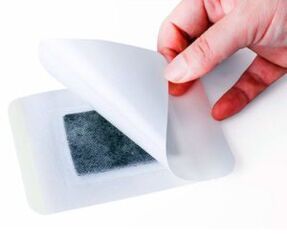
The first thing you should remember is that not a single, even the most effective, expensive or advertised patch for back pain can eliminate the disease itself.Its main purpose is to eliminate unpleasant symptoms and provide the patient with temporary relief.However, this does not mean that such funds are absolutely useless for people suffering from problems with the musculoskeletal system.On the contrary, discomfort and pain during an exacerbation of an illness or after an injury can make a person's life unbearable, and an anesthetic patch in this case is a real salvation.
To understand how this remedy works, you must first understand what exactly the pain-relieving patch is made of.Typically it consists of three layers, the first of which serves as the base, the second is the crushed medication, and the third is the gluten that holds the patch to the skin.The active ingredients can be natural or synthetic.The former are absolutely harmless and have practically no contraindications except for individual intolerance to their components, but the latter are much more effective and relieve pain much faster.For example, herbal plasters (pepper or numerous Chinese remedies) begin to act only a few hours or even days after they are applied to the skin, and some synthetic drugs (local anesthetics, NSAIDs) can significantly alleviate the patient's condition just a few minutes after the start of their application.
It is worth highlighting magnetic or nano plasters in a separate category - the use of such therapeutic plates is based on the analgesic effect of the electromagnetic field and makes them a truly indispensable tool not only for patients with diseases of the musculoskeletal system, but also, for example, for athletes or people whose professional activity is associated with constant physical activity.
Plasters for back pain are simple and easy to use - simply open the packaging, stick the plate on the skin, which can be done independently and without outside help, and you can go about your usual business.The patch continues to work for 12 to 24 hours, meaning that during this entire time the person is protected from new attacks of pain.However, these are far from the only advantages of such products.The main thing is that the drug, penetrating through the skin, immediately begins to act directly on the problem area, bypassing the circulatory system, as is the case with painkiller injections, or the gastrointestinal tract, when it comes to taking pills.In addition, it does not interact in any way with other medications that a person takes, which means that there is a possibility of safe comprehensive treatment of the disease.
But despite the effectiveness of pain-relieving plasters, you shouldn't rely solely on them.Pain and discomfort in the back can be caused not only by diseases of the musculoskeletal system, but also by serious dysfunctions of internal organs, for example, diseases of the gastrointestinal tract, kidneys, respiratory tract and even malignant tumors.Therefore, it is important first to determine the true cause of the pain and only then try to eliminate it.
Types of treatment plates
Plasters that are used for discomfort and back pain can be divided into several groups depending on their composition and principle of action.This includes:
- Pain-relieving plasters.These are local anesthetics whose main purpose is to relieve pain.They temporarily alleviate a person's condition without affecting the root cause of the disease.Most often, lidocaine or novocaine acts as an active component, and substances that promote the rapid recovery of damaged tissues can play an auxiliary role.
- Anti-inflammatory drugs.They contain non-steroidal anti-inflammatory drugs, usually based on diclofenac.Such plates not only quickly cope with severe pain during an exacerbation of the disease, but also act on the source of inflammation, reducing its intensity.They are rightly considered one of the most effective means of treating diseases of the musculoskeletal system.However, due to the excessive activity of the substances included in their composition, long-term use of NSAID-based patches can cause undesirable consequences, including disorders of kidney and liver function, gastritis or stomach ulcers.
- Plasters based on chondroprotectors.The substances contained in these therapy plates (glucosamine sulfate, thiamine, chondroitin) promote the regeneration of damaged cartilage tissue and thus gradually eliminate the cause of discomfort and back pain.Often used for osteochondrosis and other diseases associated with degenerative processes of the musculoskeletal system.
- Warming agents.Their main task is to increase blood flow and metabolic rate in the problem area, thereby reducing inflammation and shortening recovery time.The effect is achieved by irritating the skin, for example by using paprika extract or a mixture of iron powder and activated carbon.
There are also so-called reflective plasters - the safest of all, which contain no active ingredients at all.The therapeutic effect in this case is achieved by reflecting and storing the heat generated by the human body itself.Such plates have a very gentle effect and have practically no contraindications, since they do not even come into direct contact with the patient's skin, but are attached to the underwear.
However, this classification of therapeutic patches is largely arbitrary - almost each of them has a complex effect, simultaneously relieving pain and muscle tension, reducing inflammation and swelling, and activating the restoration of damaged cells.
What do pharmacies offer?
Today, the choice of pain-relieving plasters for the back is really large, so anyone who is faced with a similar problem can easily choose a product that will meet all their needs.The most popular plates include:
- Pepper patch.Within 2 days, it has a warming effect thanks to the paprika extract, begins to act on the skin within 10-15 minutes after application and has an affordable price.The disadvantage is the aggressive effect on the skin.
- An analgesic and anti-inflammatory agent based on diclofenac sodium.The duration of action is 1 day, the first effect is noticeable within a few minutes after starting use.It does not cause skin irritation, however, due to its synthetic composition, its use can cause many side effects.
- A healing plate made from an alloy of rare earth metals that has a magnetic effect on the human body.With its help, an anti-inflammatory and warming effect is achieved, which lasts up to 12 hours.
Of course, the list of patches for back pain available on the modern pharmacological market is much more extensive and it is impossible to say which one is better than all the others.Each has its own advantages and disadvantages.So if one or another remedy did not bring the desired effect, it is possible that it was simply chosen incorrectly for this particular case.This means that all questions about back plasters, for example which ones to choose or how to use them correctly, must be agreed with the treating doctor, taking into account the type of disease and the individual characteristics of the patient.